Ask ten vendors whether AI cold calling works and you will get ten confident yes answers. The honest answer is narrower. An AI appointment setter earns its keep in a few situations and wastes your money in most others, and the difference is about who you are calling, not how convincing the voice sounds. Before buying cold calling AI, work out which side of that line you sit on.
What follows is what these systems do today, where they fall over, and what Singapore's Do Not Call rules mean for you as the caller. It is a practical guide, not legal advice.
What an AI cold caller actually is today
Strip out the marketing and an AI cold caller does four things. It dials a number from a list you supply. It speaks an opening line in a synthetic voice, sometimes generic, sometimes a clone of the owner's own. It listens and matches the reply against a small set of expected responses. And when it reaches the goal you set, it books something.
The speech is good enough now that many people notice nothing odd for the first fifteen seconds. But the agent is not thinking about your business. It follows a narrow path and improvises politely at the edges. Take it sideways with an odd question and it either recovers awkwardly or passes the call to a human. Good agents pass. Bad ones keep talking.
Where AI cold calling genuinely works, and where it does not
The pattern is simple. Automated appointment setting works when the person picking up already has a reason to speak to you, and fails when they do not. It tends to work here.
- Reactivating your own lapsed customers works, because they bought from you before and the call has a reason to exist.
- Following up people who enquired and then went quiet works, because they raised their hand first.
- Confirming and rescheduling booked appointments works, because the call is useful to whoever receives it.
- Qualifying an inbound lead works, because you are ringing someone who contacted you minutes ago.
Most of those are not cold at all, which is the uncomfortable part. The best use of an outbound voice agent is warm follow-up at a volume you could never manage by hand, which is more effective and far less legally fraught than dialling strangers. The same logic explains why lead response time decides who wins on the enquiries already arriving.
It disappoints just as consistently here.
- Cold lists of strangers convert poorly, burn goodwill, and carry the most compliance risk.
- Negotiation and custom scoping sit well beyond a scripted agent.
- Complaints and anything emotionally loaded should go to a person.
- High-consideration sales need someone who can hear hesitation and change direction.
A call can book a meeting. It cannot carry a decision someone will sleep on twice and compare against two other quotes. It is a diary filler, not a closer.
What a good call sounds like, and why disclosure matters
A good AI call is short, honest and easy to end. It says who is calling and why in the first sentence. It makes one ask, not three. It offers two specific times rather than asking when someone is free, then gets off the phone.
Disclosure is not optional in practice. If someone asks whether they are speaking to a real person, the answer is no, straight away, without hedging. Cloning your own voice is reasonable enough — it is your voice and your script. It stops being reasonable the moment it is used to make someone believe you are personally on the line. Understand what voice cloning does and does not do before you try it.
A call that only works because the other person has not realised they are talking to a machine is a call that stops working the moment they do.
Singapore's Do Not Call rules are your responsibility
Singapore runs a Do Not Call Registry under the PDPA, administered by the Personal Data Protection Commission. In broad terms, an organisation generally has to check the relevant register before sending a marketing message or making a marketing call to a Singapore number, unless it holds the clear and unambiguous consent the rules require. Exemptions exist, but they are narrow, and they differ between calls and text messages. Do not assume that what applies to SMS applies to dialling.
The screening obligation sits with you, not with your software. No dialler, ours included, absolves the organisation behind the campaign. The check has to be done before a marketing call goes out, and it has to be current. The rules change, so read them at source: the PDPC publishes its guidance at pdpc.gov.sg. Take your own advice if you are calling at volume.
Beyond the register itself, a few habits keep you out of trouble.
- Screen your list before the campaign runs, and record when you checked.
- Keep evidence of any consent you rely on, and of the channel it came through.
- Honour an opt-out immediately and across every channel, not only the one it arrived on.
- Keep to sensible calling hours, because lawful and courteous are different tests.
Recordings and transcripts are personal data too, so ask where they are processed, how long they are kept, and whether they train someone else's model. Our plain-English PDPA checklist covers that.
Setting up an AI appointment setter that has a chance
Most failures are setup failures, not technology failures. The campaigns that work are narrow and closely supervised.
- Pick one goal per campaign and remove everything the script does not need.
- Keep the script under a minute of speech, written the way you talk.
- Clean the list first, because dead numbers and past opt-outs cost you money and credibility.
- Cap the daily volume, and listen to the first fifty calls yourself before widening anything.
That last item is the one people skip and the one that decides the outcome. Real calls tell you what no dashboard will: the phrase that makes people hang up, the objection nobody scripted for, the mispronounced company name.
How to measure cold calling AI honestly
Four numbers, in this order. Connect rate is how many dials reach a live human, and it judges your list rather than your script. Conversation rate is how many stay on past the opening line, which tests the script and the voice. Booked rate is how many conversations end with a slot in the diary. Show-up rate is how many of those people turn up, and it is the only one that pays your bills.
You will see impressive figures quoted for all four. Ignore them, including any we might be tempted to quote at you. They swing so heavily with the list, the offer and the trade that someone else's benchmark tells you nothing. Measure your own, and compare the cost per appointment that showed up against the same effort in staff time.
Track complaints and opt-outs with equal seriousness. A campaign that books a few appointments while irritating two hundred people is a bill that arrives later.
You probably should not do this if…
Some honest disqualifiers. If your list was bought or scraped, stop: you have a compliance problem before a marketing one. If you cannot state the goal of the call in one sentence, the agent will not manage it either. If your service needs a site visit or a bespoke quote before anyone can say yes, the call has little useful work to do. And if you would be uncomfortable explaining that a machine rang them, listen to that.
In most of those cases the better investment is answering the demand you already have. An AI receptionist that picks up every enquiry within seconds usually produces more booked work than an outbound campaign, and nobody gets interrupted at dinner for it.
Where microcrew fits
microcrew is an AI assistant for Singapore small businesses. It replies to WhatsApp and Telegram enquiries in about 30 seconds, around the clock, from your own prices, policies and documents. Outbound calling is one part of it.
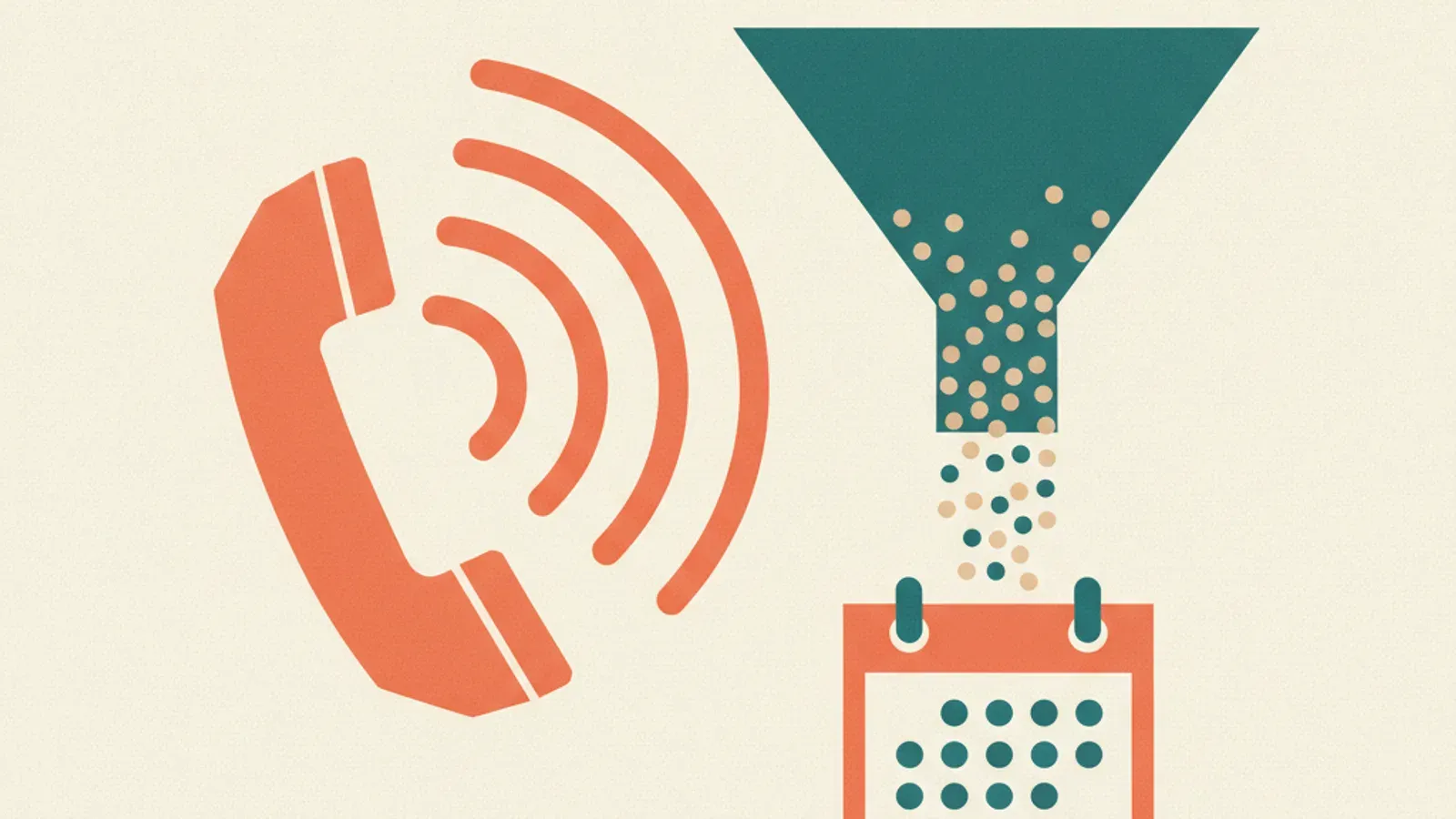
Calls go out in your own cloned voice, from a script and goal you set, and the booked appointment lands in your Google Calendar. Volume is budgeted and capped, every call is logged with a transcript and outcome you can review, and results roll up into a funnel of calls made, connected and booked. When a call needs human judgement, it hands back to you. NRIC and card numbers are redacted at ingestion before anything is stored or sent to a model, AI processing runs on Google Vertex AI in Singapore under a no-training agreement, and retention is bounded.
What it does not do is check numbers against the Do Not Call Registry. That screening, and any consent you rely on, stays your responsibility before the first call goes out.
Plans are SGD $99, $199 and $399 a month, and access is invite-only at the moment. If the honest version above still sounds like a fit, read more about how the calling side works and request early access.